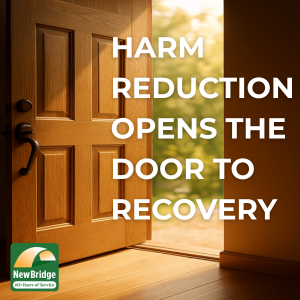
A man with a steady career who was drinking heavily sought help from NewBridge Services for help last spring, but wasn’t prepared to stop cold turkey. With NewBridge’s support, the began cutting back little by little. Today, he’s sober, and his relationship with his wife has improved tremendously. His experience underscores how harm reduction can open the door to lasting recovery.
“The most important thing is recognizing the problem and taking those first steps, however small, toward change,” said Stacey Marowitz, NewBridge’s director of substance use services. “Recovery doesn’t have to happen all at once — it’s a process.”
September is National Recovery Month, a time to celebrate progress and raise awareness that treatment works. More than 50 million American adults considered themselves in recovery from a substance use and/or mental health disorder, according to a September 2024 report by the Substance Abuse and Mental Health Services Administration (SAMHSA).
The Data
Nearly 17% of Americans age 12 and older — about 48.4 million people — had a past-year substance use disorder (SUD), according to the 2024 National Survey on Drug Use and Health (NSDUH). The percentage with a drug use disorder rose from 8.7% in 2021 to 9.8% in 2024, while the percentage with an alcohol use disorder edged down from 10.6% to 9.7%, according to NSDUH. Among adults, one-third — or 86.6 million people — had either a substance use disorder or any mental illness in the past year, NSDUH reported.
Substance use also elevates suicide risk. People with alcohol use disorder are nearly six times more likely to die by suicide than the general population, and the risk is more than eight times greater for those with both alcohol and drug use disorders, according to a Pew Research Center analysis released in February 2025. The timing is significant, since September is also Suicide Prevention Month.
Meeting Diverse Needs
NewBridge Services uses evidence-based practices in an outpatient setting to help clients reduce harmful behaviors, work toward recovery, and prevent relapse. Treatment by licensed staff includes individual counseling and support groups.
Recovery at NewBridge extends beyond substance use. The nonprofit provides comprehensive care for people living with mental illness, helping them manage symptoms, build coping strategies, and live as independently as possible. And NewBridge is one of the few nonprofits in the region that also offers treatment for gambling addiction, a growing problem that can devastate individuals and families.
By offering different levels of care, NewBridge helps people find the path that works for them. Community support sustains these services. Donations can be made at newbridge.org/donate.