Years into compulsive gambling, a man sought treatment at NewBridge Services. During a session, he deleted the many gambling apps on his phone. Then he began to sweat, his cheeks flushed, his throat parched. “He was experiencing classic withdrawal symptoms of someone with an addiction,” said Madeeha Janjua-Afzal, a gambling addiction counselor at NewBridge.
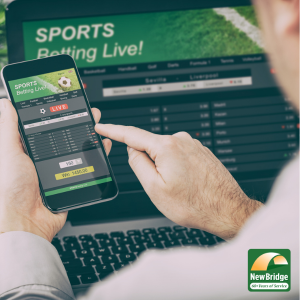
As opportunities to gamble multiply, so too are the risks of problem gambling. Gambling has moved far beyond casinos, racetracks and lottery games, and is now interwoven into the fabric of many people’s lives — including children. The legalization of sports betting, the expansion of online gambling, and the integration of gambling elements into video games have all contributed to the surge, said Derk Replogle, NewBridge’s Director of Addiction Services.
For example, numerous video games feature loot boxes that allow players to buy, with real money or earned points, the chance to gain desirable skins and weaponry for their avatars. “Young children are being exposed to this as a culture,” Replogle said. “We’re introducing the aspect of chance to younger and younger people.”
Last year, New Jersey tapped NewBridge to provide a compulsive gambling treatment program in Morris, Passaic and Sussex counties as part of a statewide initiative addressing dual disorders.
The majority of NewBridge clients with a gambling problem also cope with substance use disorder or mental illness, Replogle said. He noted that nationwide, 1 in 3 people with a substance use disorder also struggle with gambling.
800-GAMBLER
In New Jersey, a statewide survey found the gambling disorder rate to be 6.3%, compared to 1.4% nearly three decades ago, according to state Department of Human Services. A proclamation issued by Gov. Phil Murphy’s office in March reported “an estimated 4% of youth and almost twice this percentage of college students have a gambling disorder.” Calls to the state’s gambling helpline, 800-GAMBLER, increased nearly 200 percent between January 2018 and January 2022. (800-GAMBLER became a nationwide helpline in 2022.)
Lia Nower, director of the Center for Gambling Studies at Rutgers University School of Social Work, was quoted in a March 22 Newsweek article on the dangers of the sports-betting boom for young men. “The more people gamble, the more activities they gamble on, and the younger they start, the more likely they are to develop problems with not only gambling itself but also mental health problems like depression, anxiety and suicidality,” Nower said.
“You can gamble on almost anything now,” said Replogle, noting a surge in micro gambling on online sports-betting websites. While the majority of people can do it recreationally, the line of where that can cross into problem gambling “is a gray area,” he said.
Effective Treatment
People often don’t access treatment “until they’ve hit some kind of bottom” like serious financial or relationship problems, Replogle said. “You tend not to see overt signs of it until it’s far gone,” he said. All NewBridge clinicians now screen clients for a gambling problem and refer them for the specialized treatment if needed. “Treatment is effective, but like with any addiction, the person has to work on the issues,” Janjua-Afzal said.
“There’s been a surge in gambling, but there’s also more help available,” she said.
Janjua-Afzal and Replogle urged parents to pay attention to their children’s screen time, and have family dinners regularly because that’s been shown to help with problematic behaviors. “Communicate, communicate, communicate,” Replogle said. Make sure children aren’t using parents’ credit cards without permission for gaming purchases, he added.
Warning Signs
Replogle recommended that individuals concerned about their gambling habits impose time and/or financial limits. NewBridge offers an addiction support group that includes participants with a gambling problem. Signs of problem gambling include:
- Always thinking about gambling
- Lying about gambling
- Spending work or family time gambling
- Feeling bad after you gamble, but not quitting
- Gambling with money you need for other things
Janjua-Afzal said 800-GAMBLER is an excellent confidential resource. Callers to 800-GAMBLER helpline receive a screening and referrals to in-person and online Gamblers Anonymous meetings that are available at all hours, she said. In addition to the helpline, the Council on Compulsive Gambling of New Jersey coordinates the state’s self-exclusion program, allowing people concerned about their gambling habits can opt out of access to casinos and online gaming.
NewBridge’s compulsive gambling treatment program is client-centered, and goal development is a central component. Participants receive individual therapy and education, group therapy, a psychiatric evaluation, medication management and counseling for co-occurring disorders. Through case management, also participants receive care coordination for community supports. For more information, email services@newbridge.org or call (973) 316-9333.