
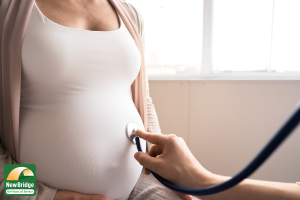
Domestic violence and pregnancy pose a severe risk to women, as studies reveal that soon-to-be and new moms in the U.S. are more likely to face life-threatening abuse from intimate partners than to suffer complications during childbirth.
“Having a baby should be a time of joyful anticipation, yet pregnancy increases the risk of violence, inflicted by the very person the woman relies on for love and support,” said Viki Ferlauto, Executive Director of Counseling Services at NewBridge Services. During Domestic Violence Awareness Month, NewBridge is intensifying its efforts to provide lifesaving counseling and recovery services to women in need.
Nearly half of homicides of women who were pregnant or within one year of pregnancy involve domestic violence (also called intimate partner violence), according to the Centers for Disease Control and Prevention. Ferlauto highlighted a 2024 study by researchers at the University of Chicago that found women who died while pregnant or within a year of giving birth were 14% more likely to have been killed by their intimate partners than women who were not pregnant. Firearms often were used.
Fatal Domestic Violence and Pregnancy
A Paterson man was convicted last year of shooting his pregnant girlfriend as she returned from an obstetric checkup. Just last month, a mother of four whose youngest was 11 months old was stabbed to death in the family’s Perth Amboy home. In New York State, a pregnant mother and her two children were stabbed, and the mother died. In both September cases, the husband was charged with murder.
How Many Pregnant Women Does Domestic Violence Affect Each Year?
The March of Dimes reports that more than 320,000 pregnant women face domestic violence during pregnancy each year. About 6% of women who recently gave birth experienced emotional, physical, or sexual abuse during their pregnancy; more than two-thirds of pregnant and postpartum victims of domestic violence also experienced it before they became pregnant, the CDC reported.
“Domestic violence during pregnancy may seem incompatible, as so many act in a protective manner toward the expectant mother, but statistics don’t lie,” Ferlauto said.
Why Does Domestic Violence Increase During Pregnancy?
Domestic violence and pregnancy can be the result of financial struggles, including housing instability and food insecurity. A partner may also engage in violence out of jealousy of the new baby or anger over an unplanned pregnancy. Restrictions on ending an unwanted pregnancy have worsened the situation: in states with limited abortion access, rates of domestic violence and homicide of pregnant and postpartum women have increased.
Being under age 30, unmarried and financially disadvantaged are risk factors for abuse while pregnant. Researchers in a 2021 study found that pregnant Black women were eight times more likely than Black women who were not pregnant to be killed in a domestic violence incident.
How Does Domestic Violence Affect Pregnant Women?
The consequences of abuse during pregnancy can be devastating. Physical abuse increases the risk of miscarriage, premature birth, and injuries to both mother and baby. For the mothers, emotional and psychological abuse foster an environment of fear and shame, leading to lasting trauma, including depression and anxiety. Sexual abuse further complicates a woman’s health, increasing the risk of infections and childbirth complications, and leaving deep emotional wounds.
How Does Domestic Violence Affect the Child?
If someone hits you while you’re pregnant, particularly in the abdomen, you can miscarry, or the unborn child can sustain serious injury. The assault of a pregnant person can result in preterm birth and low birth weight. Long-term health consequences include cognitive and developmental delays, and behavioral and emotional problems. Children exposed to domestic violence during pregnancy are at higher risk for developing anxiety, depression and aggression, according to a 2023 study.
NewBridge Offers Priority to Pregnant and Postpartum Women
"Whether it’s physical, verbal, or sexual, domestic violence can be intractable because the perpetrator and victim are emotionally entwined," Ferlauto said. Because pregnant and postpartum women are particularly vulnerable, NewBridge Services prioritizes them for both outpatient counseling and addiction treatment. Contact the Access Department at (973) 316-9333 to connect with NewBridge therapists.
If you or someone you know is being abused by a partner, call the National Domestic Violence Hotline anytime at 1-800-799-7233. NewBridge Services provides a wealth of information and resources. Please click here for more information about domestic violence and details on national, state and local resources.
NewBridge empowers women facing the dangers of domestic violence and pregnancy to protect themselves and their children, to break the cycle of violence and create a safer, brighter future. If you would like to support NewBridge, you can make a donation at https://fundraise.givesmart.com/f/5a03/n?vid=1kwscr. Thank you.